
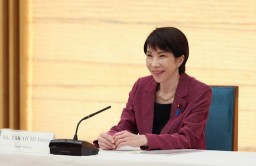
Japan has initiated the most significant release of strategic oil in its history, with Prime Minister Sanae Takaichi announcing that approximately 80 million barrels of state-held crude will be made available to domestic refiners. The drawdown, equivalent to 45 days of Japan’s total oil demand, begins this week and follows last week’s separate authorisation to release 15 days of private-sector reserves. The combined action reflects deep concern in Tokyo about the potential closure of the Strait of Hormuz due to the ongoing US-Israel conflict with Iran. Japan imports more than 90% of its crude from the Middle East, making this crisis a direct economic emergency.
Takaichi announced the release via X, calling Middle East peace and stability critically important to Japan and the global community. She has told US President Donald Trump that Japan’s postwar constitution prohibits the deployment of its naval forces to the strait, and the government has instead channelled its energy into diplomatic engagement with key regional and international partners. Japan’s response has been built on economic preparedness and multilateral diplomacy rather than military action. The prime minister has framed this approach as both principled and practical.
The current oil release is 1.8 times greater than the emergency drawdown Japan conducted after the 2011 Fukushima nuclear disaster. At that time, all of Japan’s nuclear power plants were shut down, dramatically increasing the country’s dependence on imported oil. Japan’s current reserves stand at roughly 470 million barrels, sufficient for approximately 254 days of domestic consumption. Officials have stressed that the drawdown, while unprecedented in scale, leaves Japan’s reserve position secure and manageable.
To protect consumers from surging energy costs, the government introduced fuel subsidies capping petrol at ¥170 per litre after prices hit a record ¥190.8. The subsidies are reviewed and potentially revised every week, keeping them aligned with real-time oil market conditions. Energy economists have praised both the speed and design of the policy response. Together, the reserve drawdown and consumer subsidies form a comprehensive and well-integrated emergency energy strategy.
Social media speculation about toilet paper and everyday household shortages has led to unnecessary hoarding in some areas. The trade and industry ministry quickly issued a public advisory, confirming that 97% of Japan’s toilet paper is manufactured domestically using recycled materials with no dependence on oil imports. The Japan Household Paper Industry Association confirmed stable supply and the ability to scale up production. Japan’s government is managing two challenges in parallel — a genuine energy emergency and an equally demanding battle against unfounded public panic.