
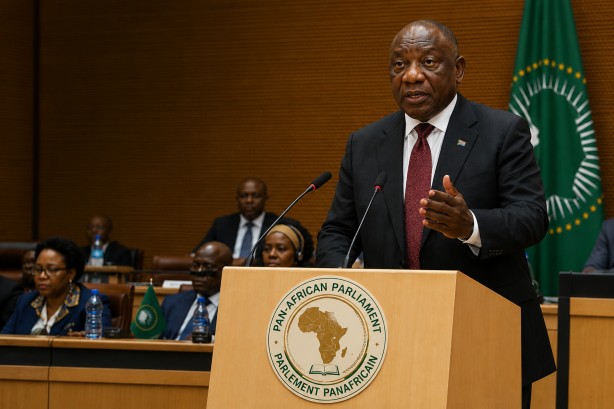
In a call for enhanced continental collaboration, South African President Cyril Ramaphosa urged African nations to strengthen unity, bolster democratic institutions, and expedite the implementation of the African Continental Free Trade Area (AfCFTA). Speaking at the First Ordinary Session of the 7th Legislature of the Pan-African Parliament, Ramaphosa highlighted the necessity for Africa to collectively tackle global economic challenges, geopolitical tensions, climate change, and regional instability.
Ramaphosa emphasized the critical role of the Pan-African Parliament in advancing democracy, transparency, accountability, and constitutional governance across Africa. He encouraged lawmakers to enhance oversight, align legislation, and ensure that commitments made by the African Union lead to tangible improvements in citizens’ lives. The address underscored the importance of these institutions in fostering a stable and prosperous future for the continent.
Touching on this year’s African Union theme of water security, Ramaphosa called for increased investment in water infrastructure and improved governance. He stressed the importance of cross-border cooperation to guarantee sustainable access to clean water and sanitation. Additionally, Ramaphosa advocated for reinforced collaboration on climate resilience and public health preparedness, recognizing these as vital areas for the continent’s development.
The South African president reiterated his support for the AfCFTA, describing it as a pivotal mechanism for economic integration, industrialization, and job creation across Africa. He urged the removal of trade barriers, modernization of customs systems, improvement of transport infrastructure, and harmonization of regulations to harness the full potential of continental trade. These steps, he suggested, are crucial for realizing the AfCFTA’s promise of economic growth.
Addressing the issue of migration, Ramaphosa called on African countries to balance effective immigration management with a respect for human rights, while addressing the root causes of migration such as conflict, poverty, and unemployment. He concluded his address with a vision for a united Africa, one that invests in education, infrastructure, democratic institutions, and sustainable development to ensure long-term peace and prosperity for its people.
Legal Disclaimer: The information contained in this article has been provided by independent third-party contributors, clients, or content partners. We do not independently verify the accuracy, completeness, legality, ownership, licensing, or reliability of submitted content, including text, images, videos, trademarks, or other media materials. The submitting party is solely responsible for ensuring that all content, including images and media assets, complies with applicable copyright, trademark, licensing, and intellectual property laws. We disclaim liability for any unauthorized use of copyrighted or proprietary materials by third parties. If you believe that any content published on this platform infringes your intellectual property rights, kindly contact the author above for prompt review and resolution.